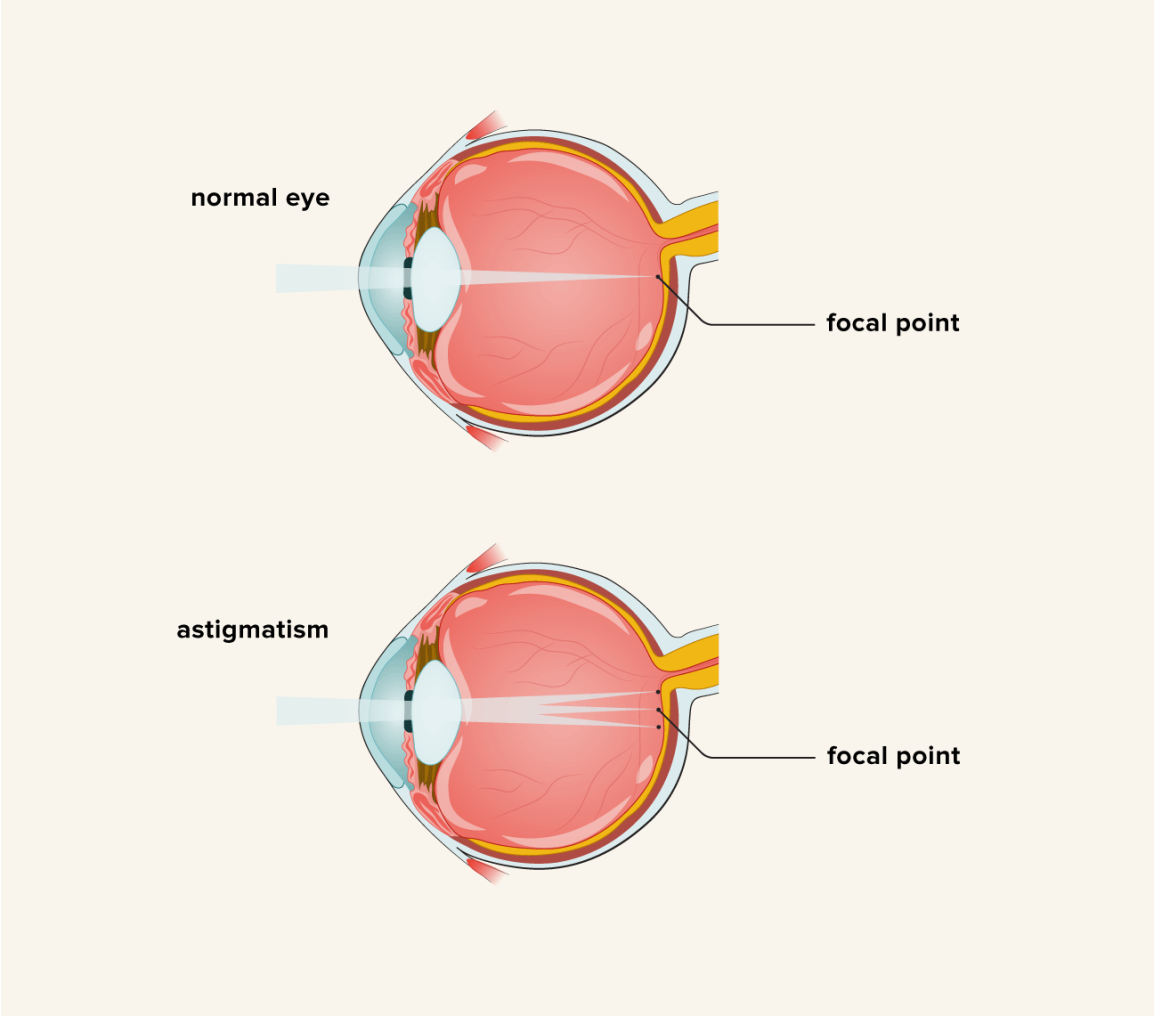
Astigmatism is a common refractive error in the eye that leads to blurred or distorted vision. This condition occurs when the cornea or lens of the eye has an irregular shape, which prevents light from focusing properly on the retina. Instead of a sharp, clear image, individuals with astigmatism experience multiple focus points on the retina, resulting in blurry or distorted vision. Understanding the causes, symptoms, and treatment options for astigmatism can help those affected manage their condition effectively.
Causes of Astigmatism
Astigmatism typically arises due to irregularities in the shape of the cornea or the lens. The cornea is the clear, dome-shaped surface that covers the front of the eye, while the lens is the transparent structure inside the eye that helps focus light. In a normal eye, the cornea and lens have a spherical shape, allowing light to focus evenly on the retina. However, in an eye with astigmatism, the cornea or lens may be shaped more like a football, causing light to focus on two different points instead of one.
There are two main types of astigmatism:
-
Corneal Astigmatism: Caused by an irregularly shaped cornea.
-
Lenticular Astigmatism: Caused by an irregularly shaped lens.
While the exact cause of astigmatism is not always clear, it can be hereditary, meaning it often runs in families. In some cases, astigmatism can develop after an eye injury, surgery, or other health conditions affecting the eye.
Symptoms of Astigmatism
The symptoms of astigmatism can vary depending on the severity of the condition. Common signs include:
-
Blurred or distorted vision: Objects may appear stretched or skewed.
-
Eye strain: Effort to focus on objects, especially in low light, can cause discomfort.
-
Headaches: Frequent headaches may result from the constant strain of trying to focus.
-
Difficulty seeing at night: Astigmatism can cause halos or glare around lights, particularly in low-light conditions.
-
Squinting: People with astigmatism may squint to try and see clearly, leading to eye fatigue.
Diagnosis of Astigmatism
An eye exam by an optometrist or ophthalmologist can diagnose astigmatism. During the exam, a visual acuity test and a procedure called keratometry (which measures the curvature of the cornea) are typically performed. These tests help the eye care professional assess the extent of the astigmatism and prescribe the most appropriate treatment.
Treatments for Astigmatism
There are several treatment options for astigmatism, depending on the severity of the condition:
-
Eyeglasses: The most common and simplest way to correct astigmatism is by wearing glasses with cylindrical lenses. These lenses compensate for the uneven curvature of the cornea or lens, helping to focus light properly on the retina.
-
Contact Lenses: Special toric lenses can correct astigmatism by compensating for the irregular shape of the cornea or lens. Some people with mild to moderate astigmatism may also opt for rigid gas-permeable (RGP) lenses, which can help reshape the cornea over time.
-
Refractive Surgery: For those seeking a more permanent solution, LASIK (Laser-Assisted in Situ Keratomileusis) and PRK (Photorefractive Keratectomy) are options. These surgeries reshape the cornea to improve the focus of light on the retina.
-
Orthokeratology (Ortho-K): This non-surgical option involves wearing specially designed contact lenses that reshape the cornea while you sleep, allowing for clear vision during the day without the need for glasses or contacts.
Managing Astigmatism
While astigmatism cannot be prevented, it can usually be managed effectively with the right corrective measures. Regular eye exams are important to ensure your prescription is up-to-date and that your eyes remain healthy. If left untreated, astigmatism can lead to further vision problems, so it’s important to address the condition promptly.
In conclusion, astigmatism is a common refractive error that causes blurred or distorted vision. It can be caused by irregularities in the cornea or lens of the eye, and symptoms can vary from mild to severe. With the right treatment, such as glasses, contact lenses, or surgery, most people with astigmatism can enjoy clear and comfortable vision. If you're experiencing symptoms of astigmatism, schedule an eye exam with a healthcare professional to discuss your treatment options and improve your vision.