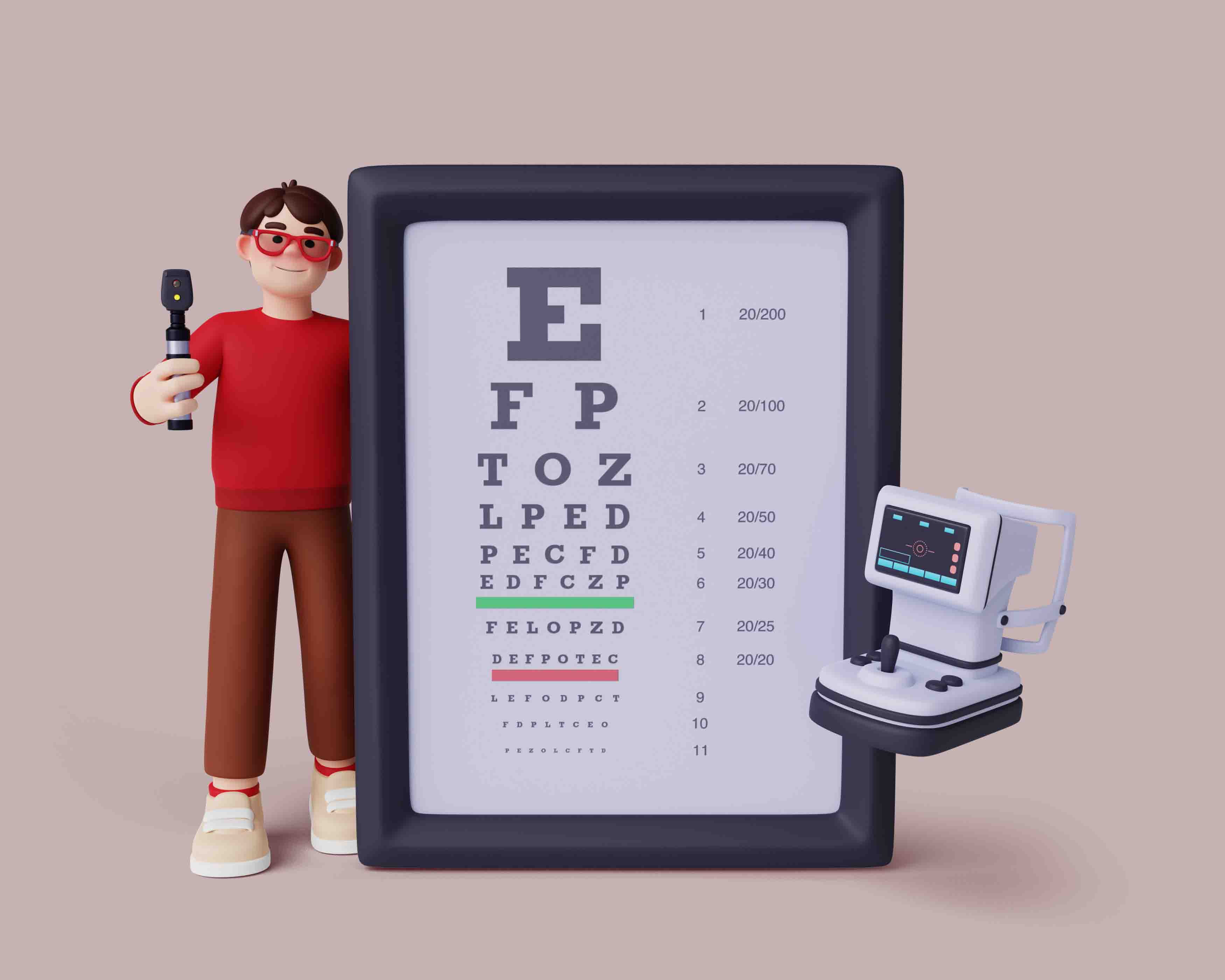
Visual acuity refers to the clarity or sharpness of your vision. It's a key part of every eye exam and helps determine how well you can see details at a distance or up close. This measurement is often taken using an eye chart where you read letters of various sizes from a specific distance, typically 20 feet.
The standard for normal vision is 20/20. If your visual acuity is 20/40, it means you need to be at 20 feet to see what a person with normal vision sees at 40 feet. Factors like refractive errors (myopia, hyperopia, astigmatism), eye diseases, and aging can affect visual acuity.
Regular eye exams are crucial for monitoring changes in visual acuity and detecting underlying eye conditions early. If you notice blurry vision, squinting, or eye strain, consult an eye care professional promptly.
Knowing your visual acuity helps in choosing the right corrective lenses or exploring treatment options for clearer vision.